
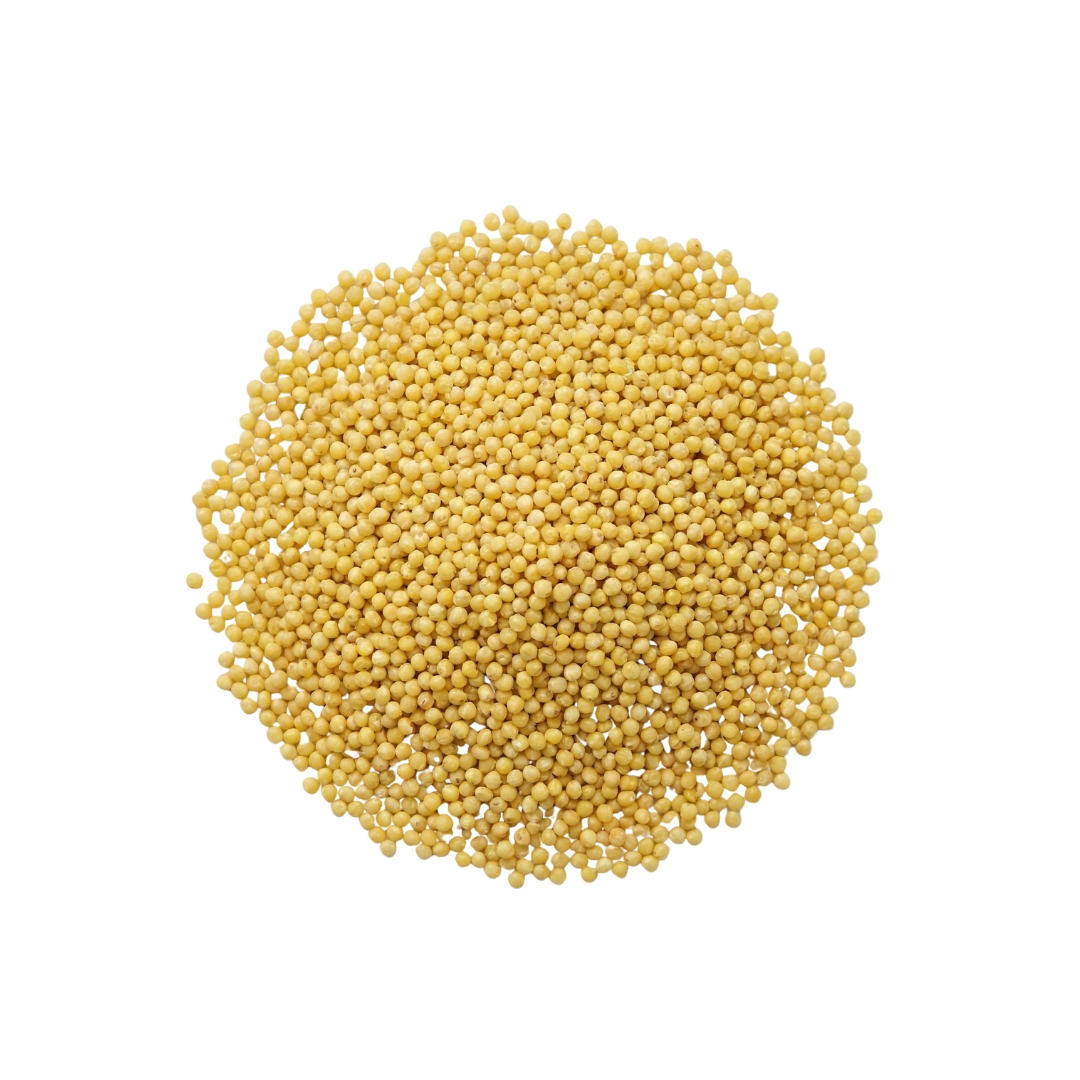
Foxtail Millet (कंगनी)
Foxtail Millet grains are small, smooth, and yellowish or pale in color. They are highly nutritious, rich in carbohydrates, protein, fiber, vitamins, and minerals, and are especially valued for their low glycemic index, making them suitable for diabetic diets.
Key Features
Grain Type: Small, slender, oval grains with a smooth surface.
Nutritional Benefits: Rich in carbohydrates, dietary fiber, protein, iron, and B-vitamins; gluten-free and easy to digest.
Texture & Cooking: Cooks quickly; grains become soft and slightly fluffy; can be used whole or ground into flour.
Agricultural Benefits: Drought-tolerant, short growing season, and adapts to marginal soils.
Common Uses
Food:
Porridge, upma, khichdi, and pulao
Ground into flour for breads, pancakes, and baked goods
Fermented dishes and traditional recipes
Health Foods: Suitable for weight management and diabetic diets due to low glycemic index
Animal Feed: Occasionally used as fodder
Foxtail Millet grains are small, smooth, and yellowish or pale in color. They are highly nutritious, rich in carbohydrates, protein, fiber, vitamins, and minerals, and are especially valued for their low glycemic index, making them suitable for diabetic diets.
Key Features
Grain Type: Small, slender, oval grains with a smooth surface.
Nutritional Benefits: Rich in carbohydrates, dietary fiber, protein, iron, and B-vitamins; gluten-free and easy to digest.
Texture & Cooking: Cooks quickly; grains become soft and slightly fluffy; can be used whole or ground into flour.
Agricultural Benefits: Drought-tolerant, short growing season, and adapts to marginal soils.
Common Uses
Food:
Porridge, upma, khichdi, and pulao
Ground into flour for breads, pancakes, and baked goods
Fermented dishes and traditional recipes
Health Foods: Suitable for weight management and diabetic diets due to low glycemic index
Animal Feed: Occasionally used as fodder

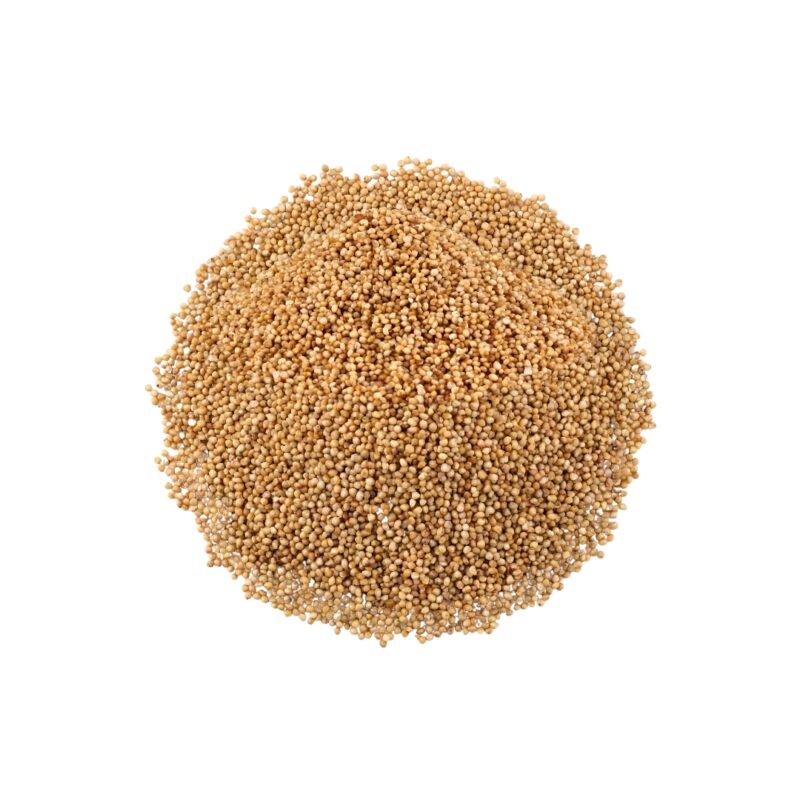
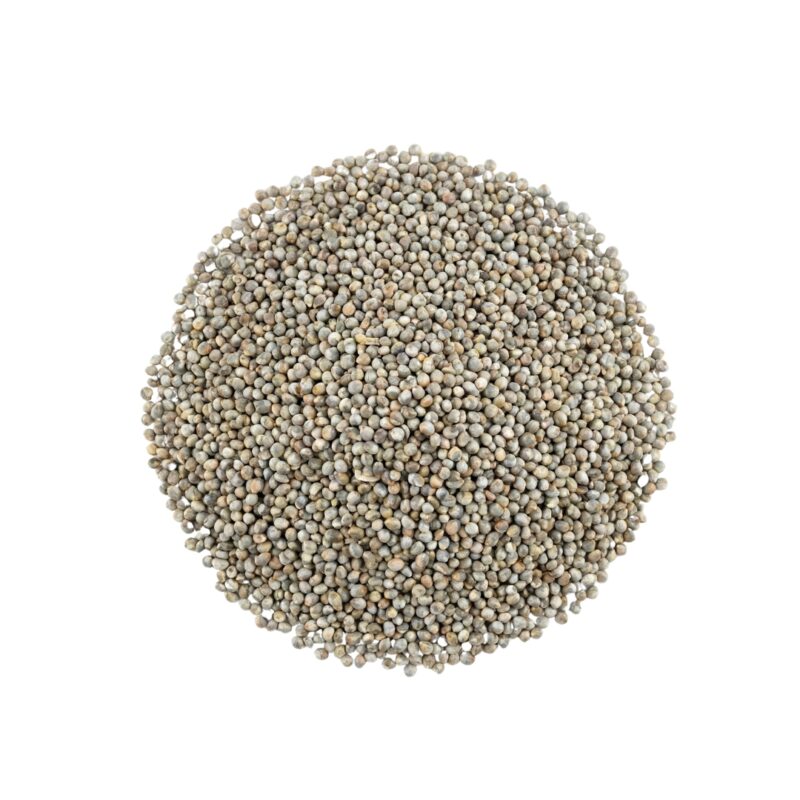
Reviews
There are no reviews yet.