
Finger Millet (रागी)
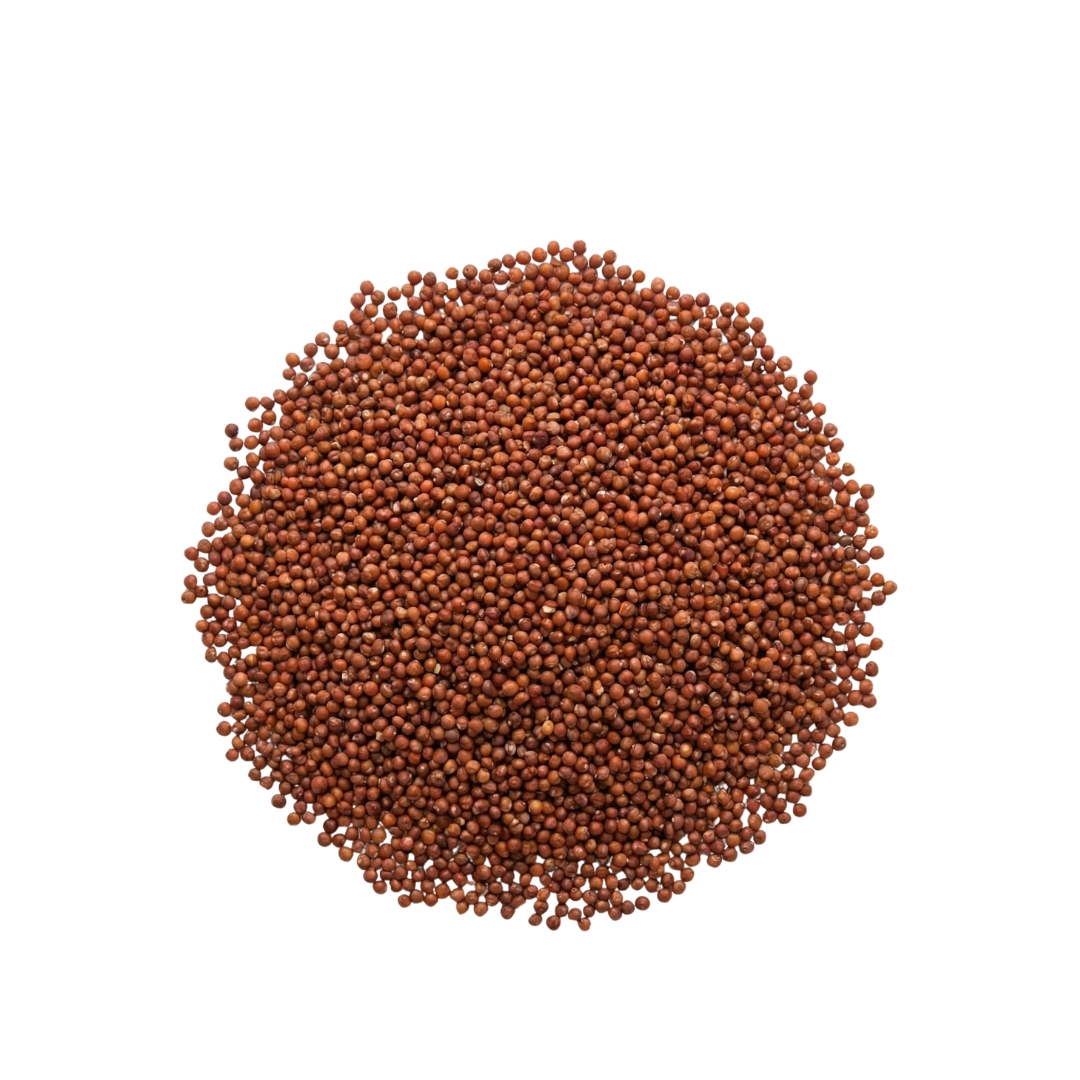
Finger millet grains are small, hard, and reddish-brown to dark brown in color. They are highly nutritious and resilient, making them a staple in arid and semi-arid regions. The grains can be ground into flour or used whole for porridges and other traditional dishes.
Key Features
Grain Type: Small, hard, oval-shaped grains, usually reddish-brown but can vary in color.
Nutritional Benefits: Rich in calcium, iron, protein, dietary fiber, and essential amino acids; gluten-free.
Texture & Cooking: Can be roasted and ground into flour, cooked as porridge, or used in baking; has a slightly nutty flavor.
Agricultural Benefits: Drought-tolerant and grows well in poor soils.
Common Uses
Food:
Flour for rotis, pancakes, cookies, and porridge
Fermented foods and traditional beverages
Infant and weaning foods (due to high nutrition)
Animal Feed: Sometimes used as fodder in rural areas
Health Foods: Popular in gluten-free and high-calcium diets
Finger millet grains are small, hard, and reddish-brown to dark brown in color. They are highly nutritious and resilient, making them a staple in arid and semi-arid regions. The grains can be ground into flour or used whole for porridges and other traditional dishes.
Key Features
Grain Type: Small, hard, oval-shaped grains, usually reddish-brown but can vary in color.
Nutritional Benefits: Rich in calcium, iron, protein, dietary fiber, and essential amino acids; gluten-free.
Texture & Cooking: Can be roasted and ground into flour, cooked as porridge, or used in baking; has a slightly nutty flavor.
Agricultural Benefits: Drought-tolerant and grows well in poor soils.
Common Uses
Food:
Flour for rotis, pancakes, cookies, and porridge
Fermented foods and traditional beverages
Infant and weaning foods (due to high nutrition)
Animal Feed: Sometimes used as fodder in rural areas
Health Foods: Popular in gluten-free and high-calcium diets
Reviews
There are no reviews yet.